Charge now, or take one more ride?
Ask someone how robotaxis will charge and they'll usually describe the plug, a robot arm reaching for the port or maybe a pad under the car.
We spend a lot of our time at AutoDock on that hardware, and I'll come back to it later, because it turns out to be half of the answer. The question I think about most sits one step earlier: a car at 22% at quarter past five on a Tuesday, and whether it should go and charge now or pick up one more rider first, and if it charges, where it goes and how long it stays.
A taxi driver settles that with a look at the gauge and the clock. Once nobody is in the driver's seat, software has to settle it for every car in the fleet, many times a day, and a bad call costs a few dollars each time, which adds up fast across a few hundred cars.
Counting the cost in minutes
Electricity is a small part of what charging costs a robotaxi. Most of the cost is the time the car spends away from paying riders, from the moment it turns toward a charger until it's back in service, so we score every option in minutes of lost fleet revenue.
Scored that way, a couple of old habits look bad. Filling the battery to 100% usually wastes time, because the last 20% goes in slowly while the car could be out earning. A cheap tariff window loses its appeal too if using it means pulling a car off the road at 6 pm on a Friday.
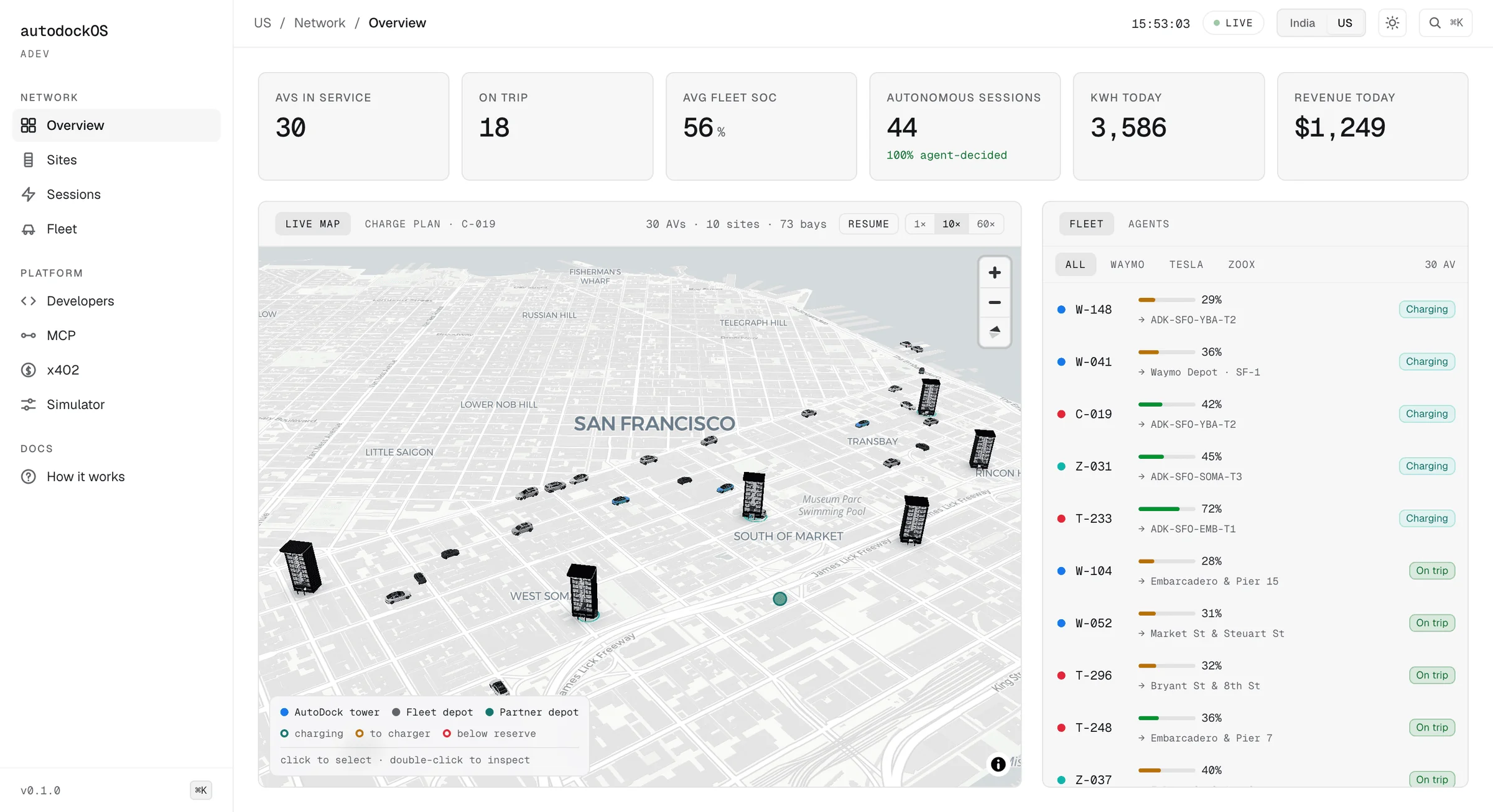
At any moment the system can send a car to charge, park it somewhere to wait for demand, move it to another part of the city or another hub, or leave it taking rides and look again a few minutes later. Choosing between those four means looking at:
- the car's state of charge, and how quickly it's falling;
- the demand forecast, meaning when the next rush starts in that part of the city and how many cars it will need;
- which bays are free now, and which will free up soon;
- charger power, since a 150 kW bay and a 60 kW bay are very different options;
- energy price and supply, including tariff windows, rooftop solar and the site's power limit;
- what every other car in the fleet is doing.
That last item gets underestimated. If ten cars each work out on their own that the same hub is their best bet at 5:40 pm, all ten drive there and wait in line, even though every one of those choices was sensible by itself. So Laan AI plans for the whole fleet in one pass.
Two bays, one car
Here's a simple case, with numbers I've made up to show the logic (they don't come from a real fleet). A car at 22% needs about 45 kWh to get back to 85%, a minute of its time is worth $0.85 to the fleet, and two bays are free:
| Drive | Charger | Queue | Charging | Off the road | Lost fare time | |
|---|---|---|---|---|---|---|
| Bay A | 4 min | 150 kW, free now | None | ≈ 18 min | 22 min | ≈ $19 |
| Bay B | 1 min | 60 kW | 10 min | ≈ 45 min | 56 min | ≈ $48 |
Bay B is a minute away and looks like the obvious pick until you add the 10-minute queue and the slower charger, which keep the car off the road for 56 minutes and cost about $48 in fares. Bay A comes to about $19, so the car goes to Bay A.
Then the forecast changes: demand will spike in 15 minutes, two kilometres away. Now the better plan may be to charge to 60%, make it to the spike and top up afterwards. The car and the bays are the same as a minute ago and the answer moved anyway, which a fixed rule like "charge below 25%" would miss.
Laan AI
Our software for this is called Laan AI. It's split into five agents with narrow jobs: the Fleet agent handles departure windows and priority, the Parking agent picks the bay and the order cars go in, the Charging agent picks the charger and its power profile, the Energy agent balances solar, battery, grid and tariff, and the Safety agent sits alongside them.
We hold it to a few rules. Safety lives in the tower's hardware, in interlocks for braking, anti-pinch, weight limits and door locks, so a model can ask a tower to move and the interlocks still decide whether it does.
Decisions are made on site. A car asking where it can charge should get a scored answer and a held bay within about two seconds, even with the cloud connection down.
Cars also deal with the depot themselves. A car, or the fleet's dispatch system, asks for open bays over a REST or MCP interface, gets a quote and books one, and the tower gets ready for it without anybody phoning ahead or standing on site.
The other half is somewhere to send the cars
Everything above assumes the car has a bay to go to. Robotaxi fleets are growing from hundreds of cars to thousands, and at that size the bays become the harder half to build. Each charging bay needs a plot, a grid connection and planning approval, and in a dense city plots are scarce and expensive.
A driverless car also can't plug itself in. Somebody has to do it, and paying a person to stand at every charger around the clock gives back much of what the fleet saved by having no driver. So the hub has to do the physical work itself.
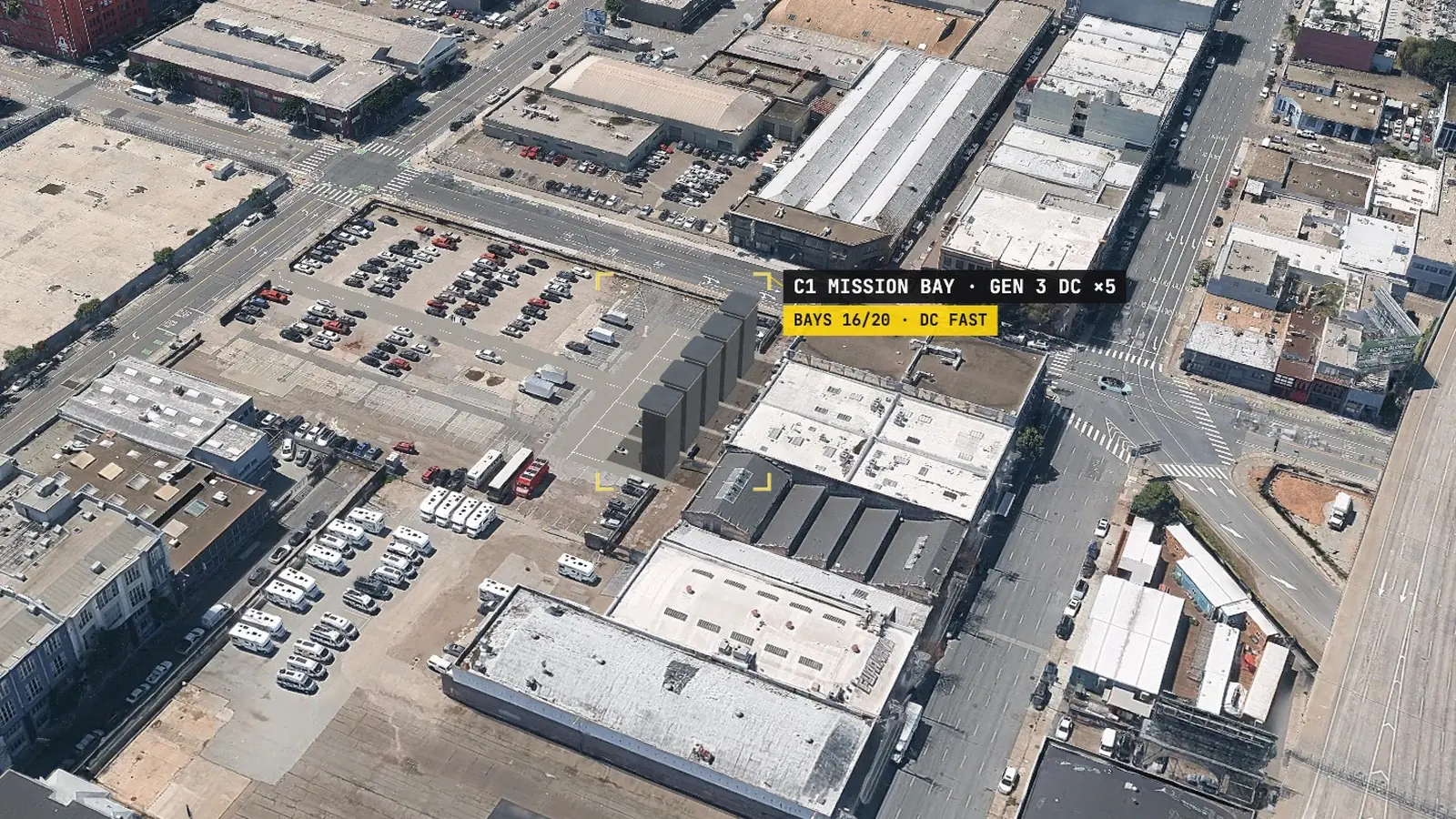
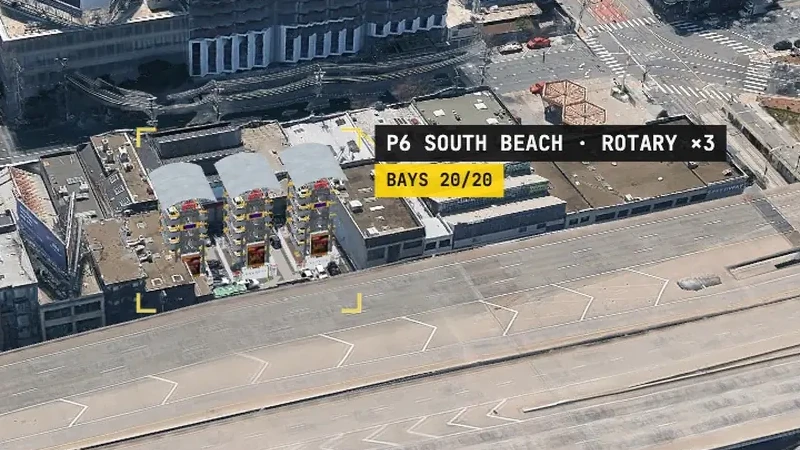
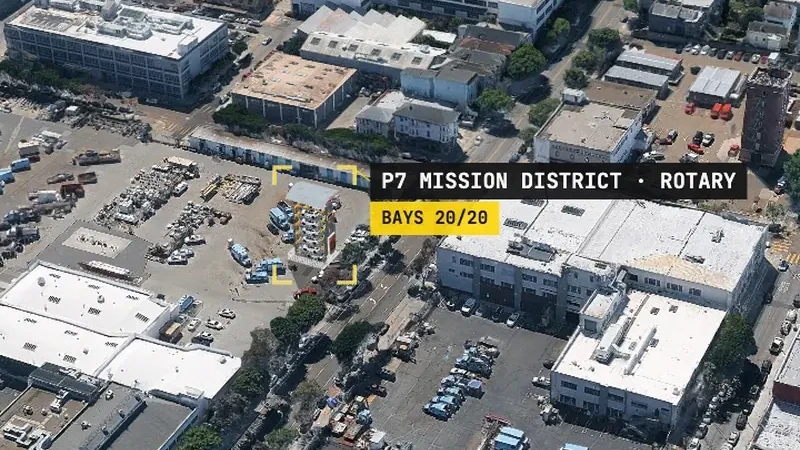
That's what we mean by physical AI, and it's the part of AutoDock you can walk up to and touch. Our autonomous depot hubs put rotary towers on ordinary surface parking lots. A 12-level tower holds 22 cars on about the footprint of two, and every bay has a 21 kW AC charger that keeps charging while the tower turns. The tower parks and retrieves each car by itself, and a vision model we're training finds the charge port so a robot arm can seat the plug, which lets a car arrive, charge and leave with nobody on site. In our San Francisco model the busier sites also get Gen 3 DC charging towers for fast top-ups.
The two halves need each other. Laan AI can only send a car to a bay that exists, and a tower only pays for itself when it's kept full at the right hours. Every tower in service also logs its parking runs, retrievals and faults, and those logs become training data for the next version of the models, so each new tower gives the software more hard cases to learn from. For a city to run thousands of driverless cars it needs a lot of these bays spread through its neighbourhoods, close to where rides start, and building them is the slow part of scaling.
Where things stand in November 2026
The tower hardware is real. Our manufacturing partner, Shandong Jiuroad Intelligent Technology, builds it and has delivered more than 3,000 projects in over 60 countries.
Laan AI runs in simulation. We built a digital twin of San Francisco with 13 tower sites on real plots and test the dispatch logic against simulated fleet days, many of them bad on purpose: a sudden demand spike, a broken charger, a grid limit, or half the fleet low on charge at once. The San Francisco depot network on our site is that simulation.
P6 · South Beach · rotary ×3
P7 · Mission District · rotary
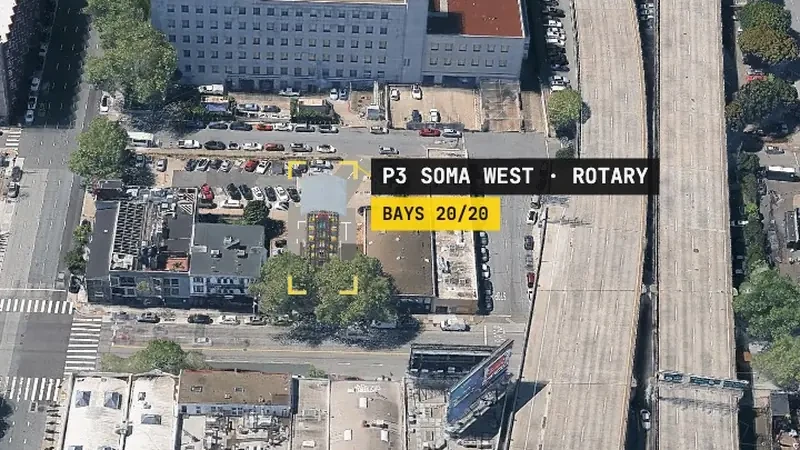
P3 · SoMa West · rotary
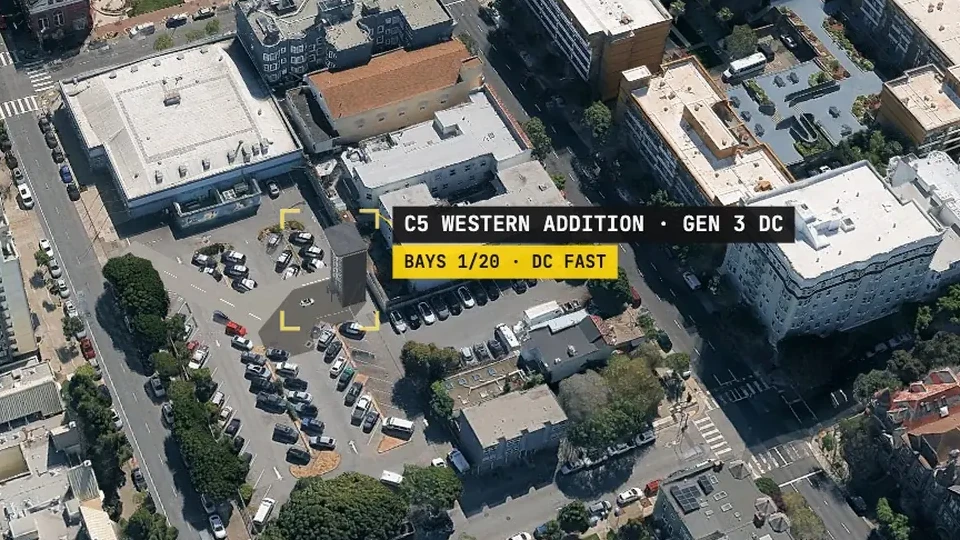
C5 · Western Addition · Gen 3 DC
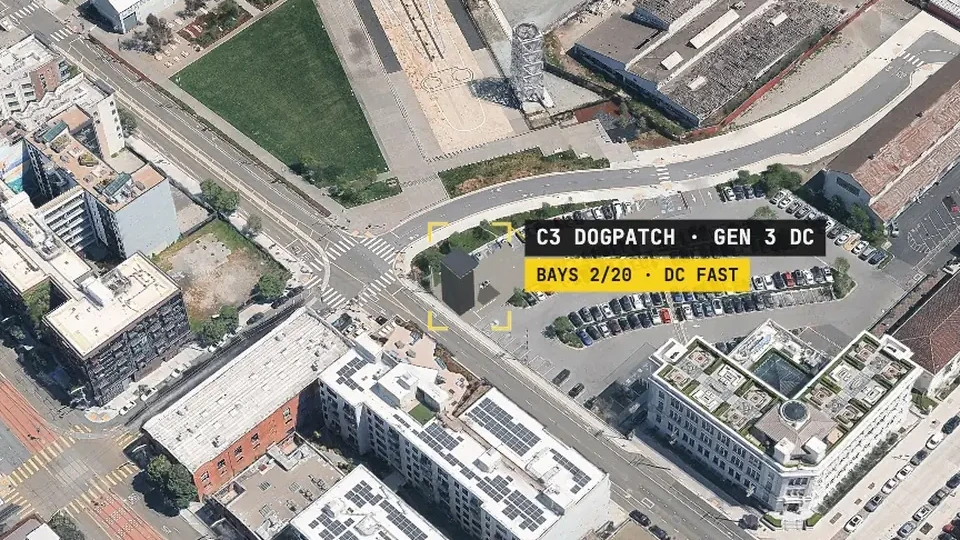
C3 · Dogpatch · Gen 3 DC
Laan AI hasn't run a real fleet yet, and I expect the first one to surprise us, since a simulation only knows what we put into it.
Releases are set up for that. A new model trains in simulation, gets replayed against recorded days and then runs in shadow mode next to the live system, where its decisions are logged and none of them are carried out. It only goes live after beating the current system in simulation and in shadow.
If you run an AV or EV fleet and want to try this on real vehicles, we're looking for our first pilot partners and would like to hear from you.