Automated parking systems with EV charging.
Autonomous infrastructure: what physical AI infrastructure is, the stack it runs on, the agents that operate it, and the ground it is built for.
AutoDock OS
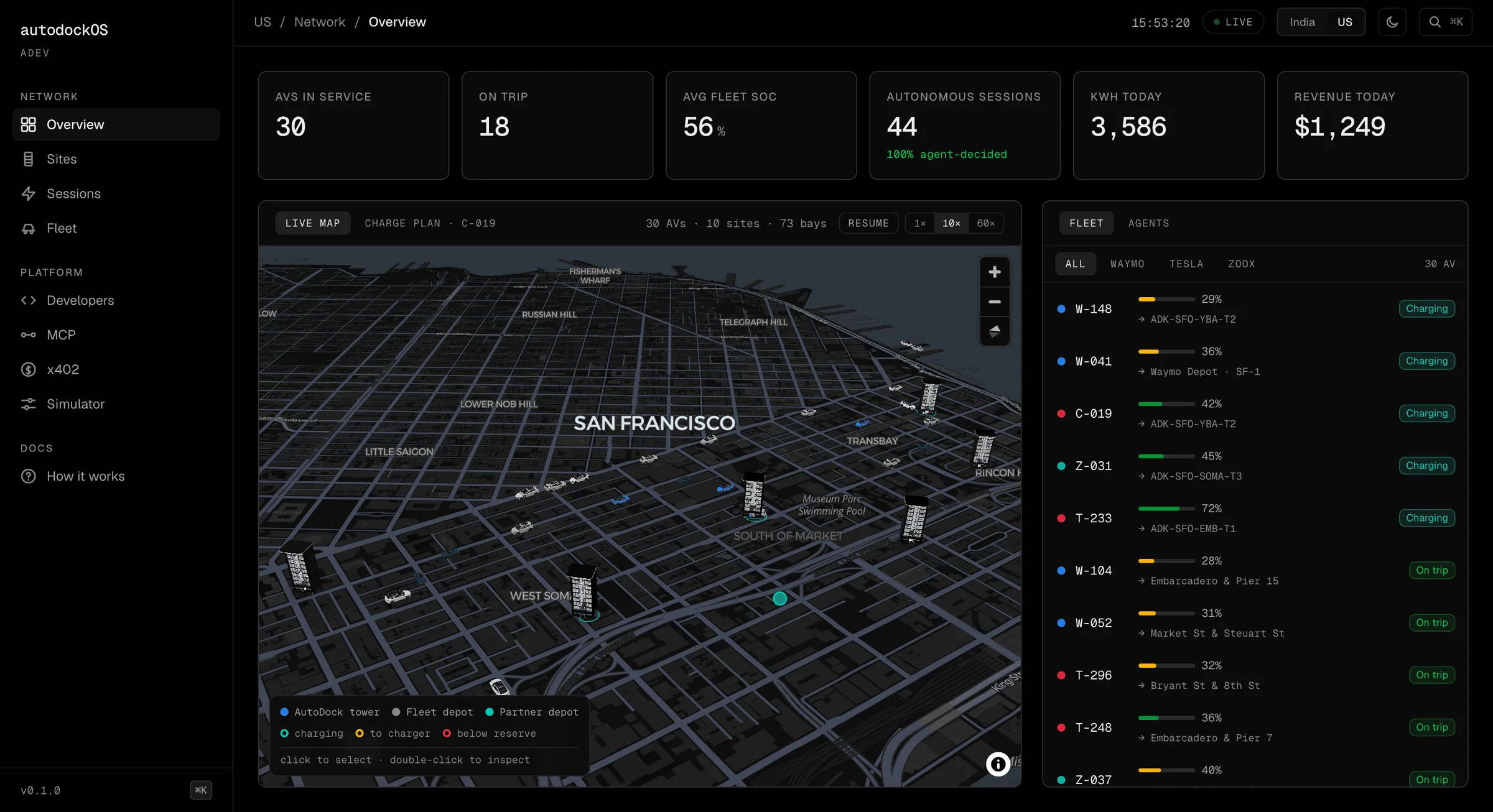
Every tower, vehicle and kilowatt on one layer.
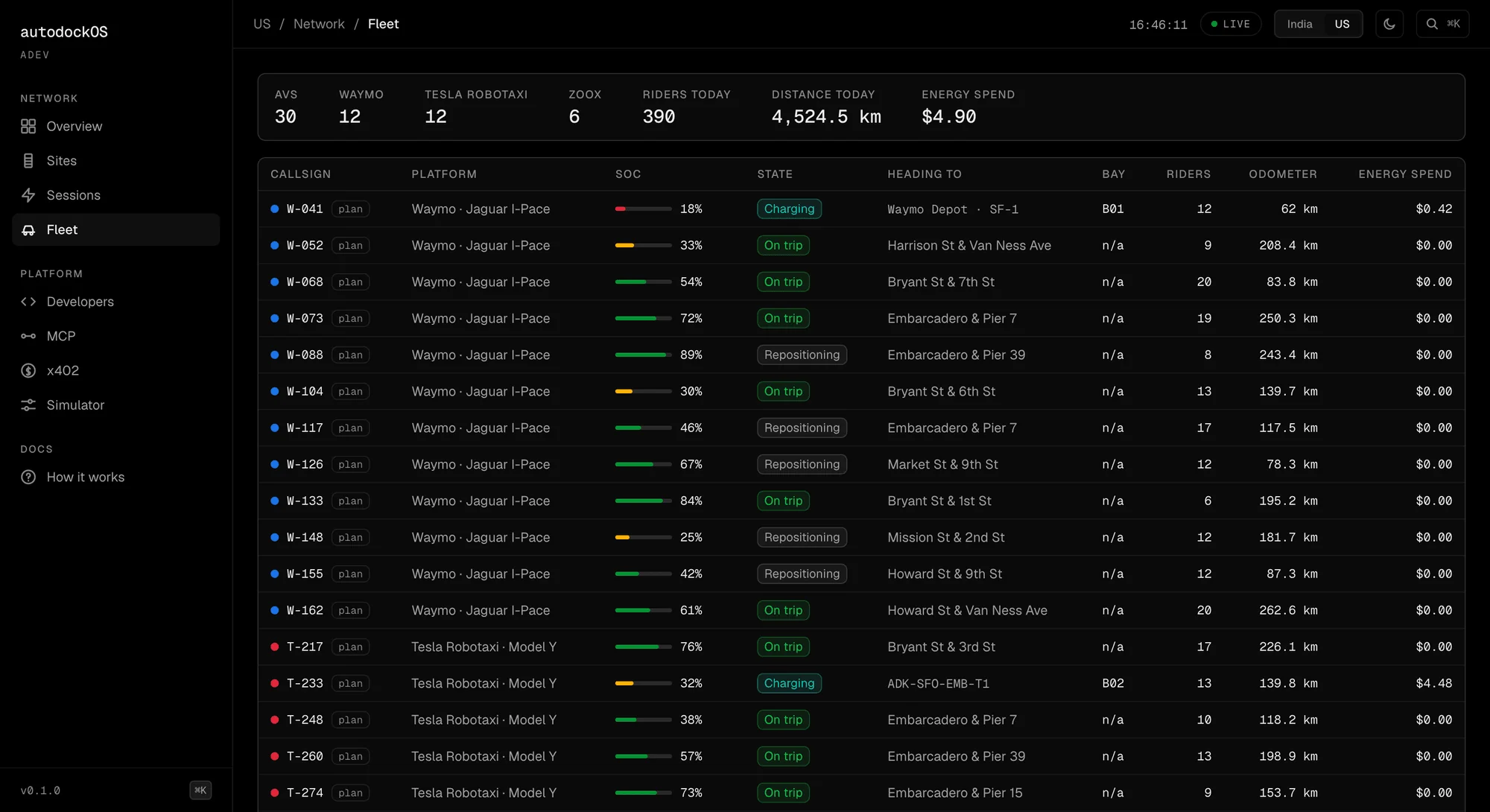
AutoDock OS connects vehicles, charging, parking, energy and infrastructure into one intelligent operating layer, so every site can sense, decide and act without anyone on hand.
Learn more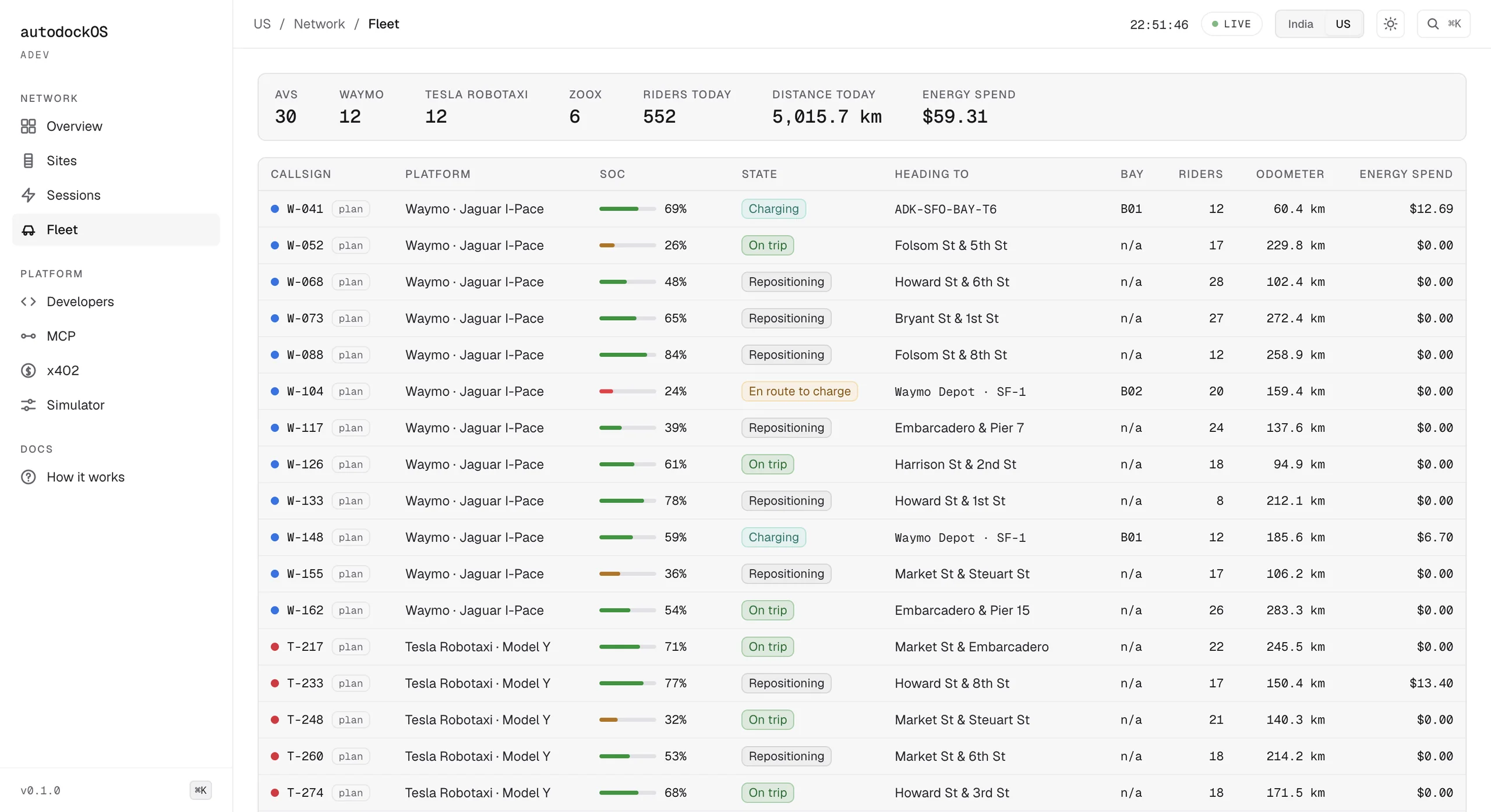
Category
What is physical AI infrastructure?
Structures that sense what is happening around them, decide what to do about it, and then physically do it.
Software alone cannot move a car, free a bay or push a kilowatt. Autonomous mobility does not only need smarter vehicles; it needs places that can receive them. That is a building problem and a model problem at the same time, which is why we are doing both.
Learn about physical AI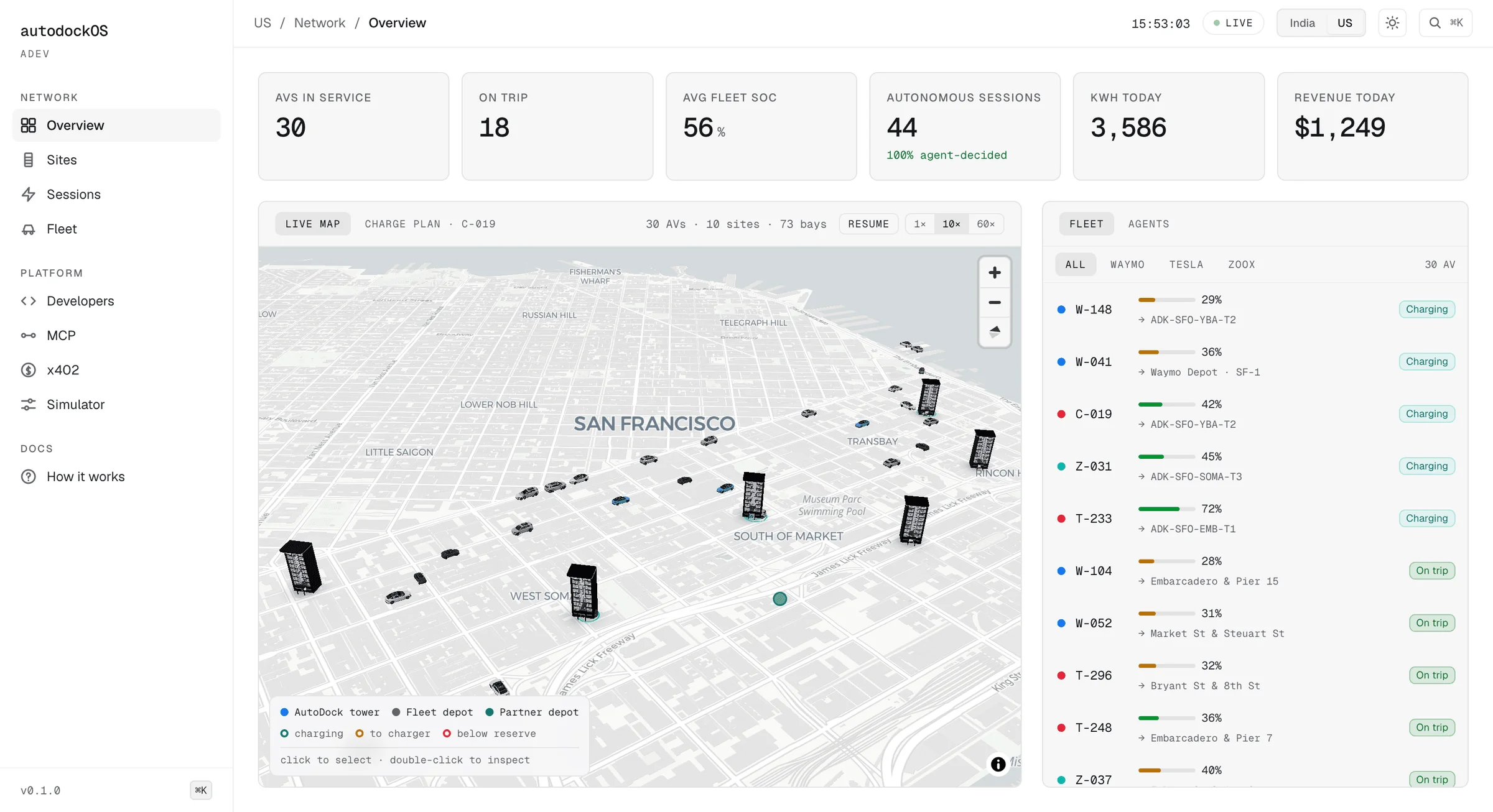
Platform
One stack, three layers.
Each one is worth less without the two beside it.
Physical layer
Rotary towers that stack twenty bays on the footprint of two, with a solar canopy overhead and a 21 kW AC fast charger in every bay. The structure is the charger, the meter and the gate.
Data layer
Occupancy, vehicle movement, session energy, structural state, grid draw and local conditions, recorded continuously across every site as one stream rather than six dashboards.
Intelligence layer
The models that read that stream and act on it: sequencing bays, shaping load against solar and tariff, predicting faults, and dispatching vehicles without a human in the loop.
Core advantages
Intelligence Engineered for Autonomous Infrastructure
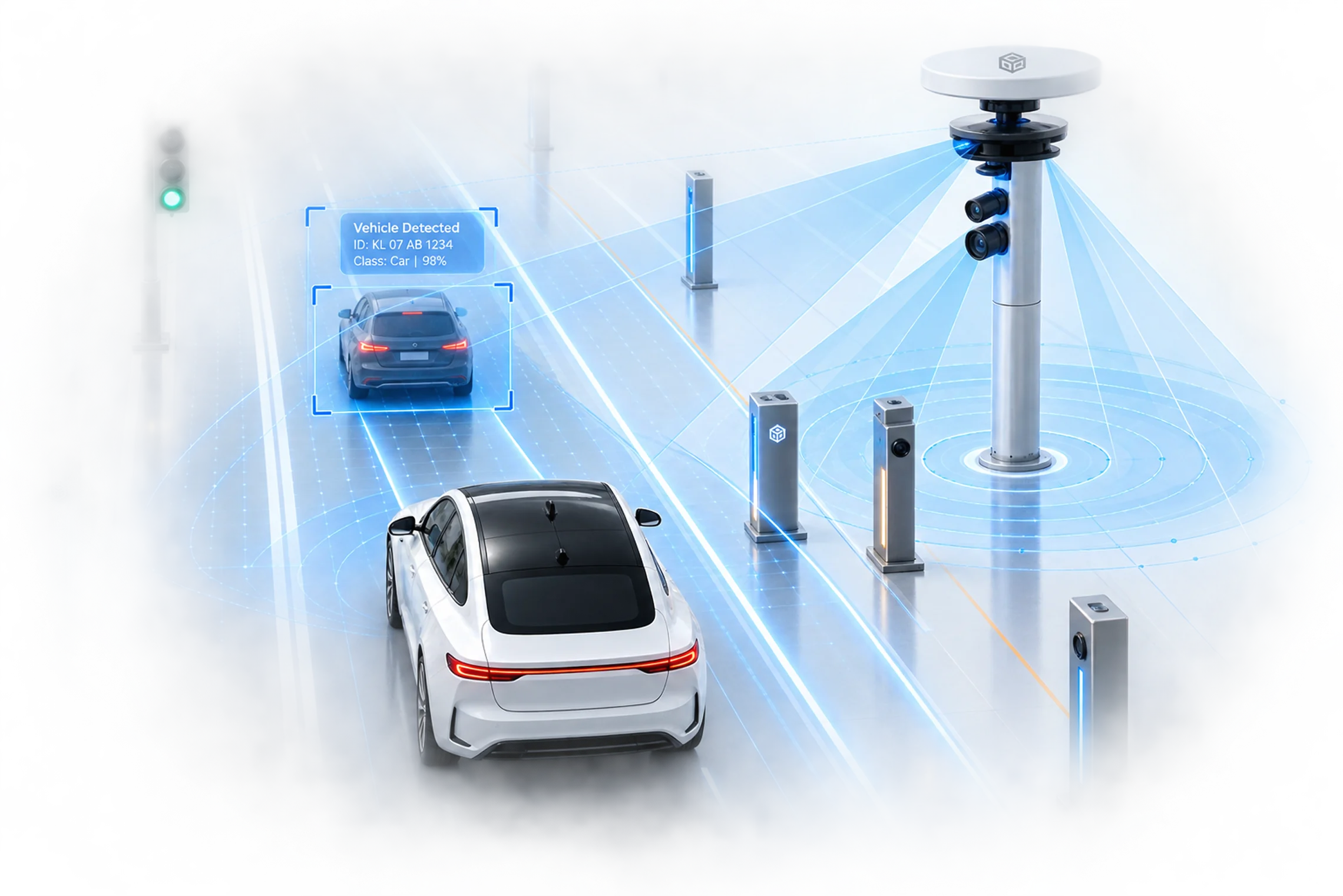
See and Signal
in Real Time
ANRP combines AI cameras for vision and AI sensors for signaling that understand vehicles, people and the environment to safely orchestrate every movement autonomously.
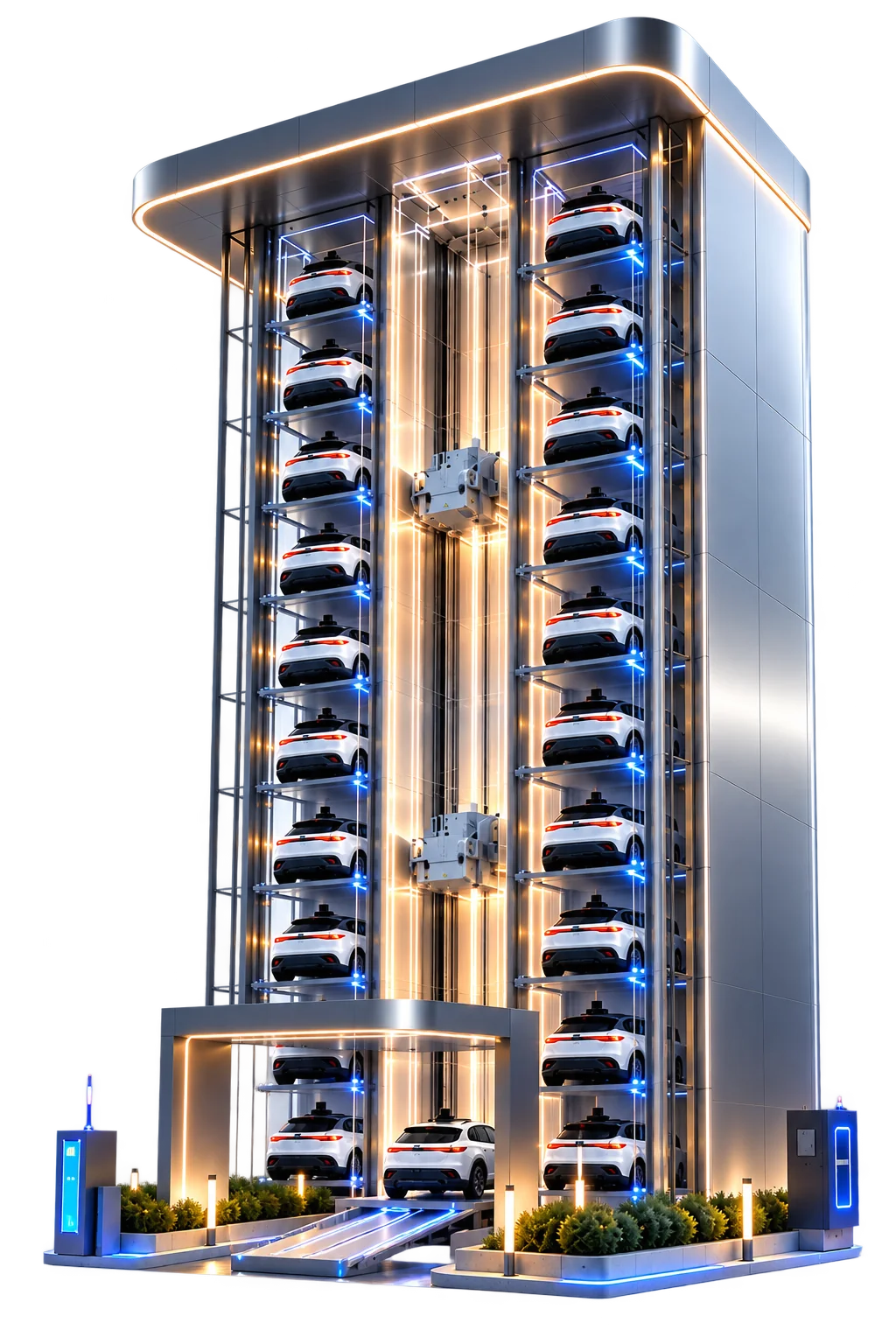
Intelligent Charging
and Energy Distribution
BESS enables intelligent charging optimization and dynamic power distribution to each slot lowering energy costs, increasing uptime and supporting large scale operations.
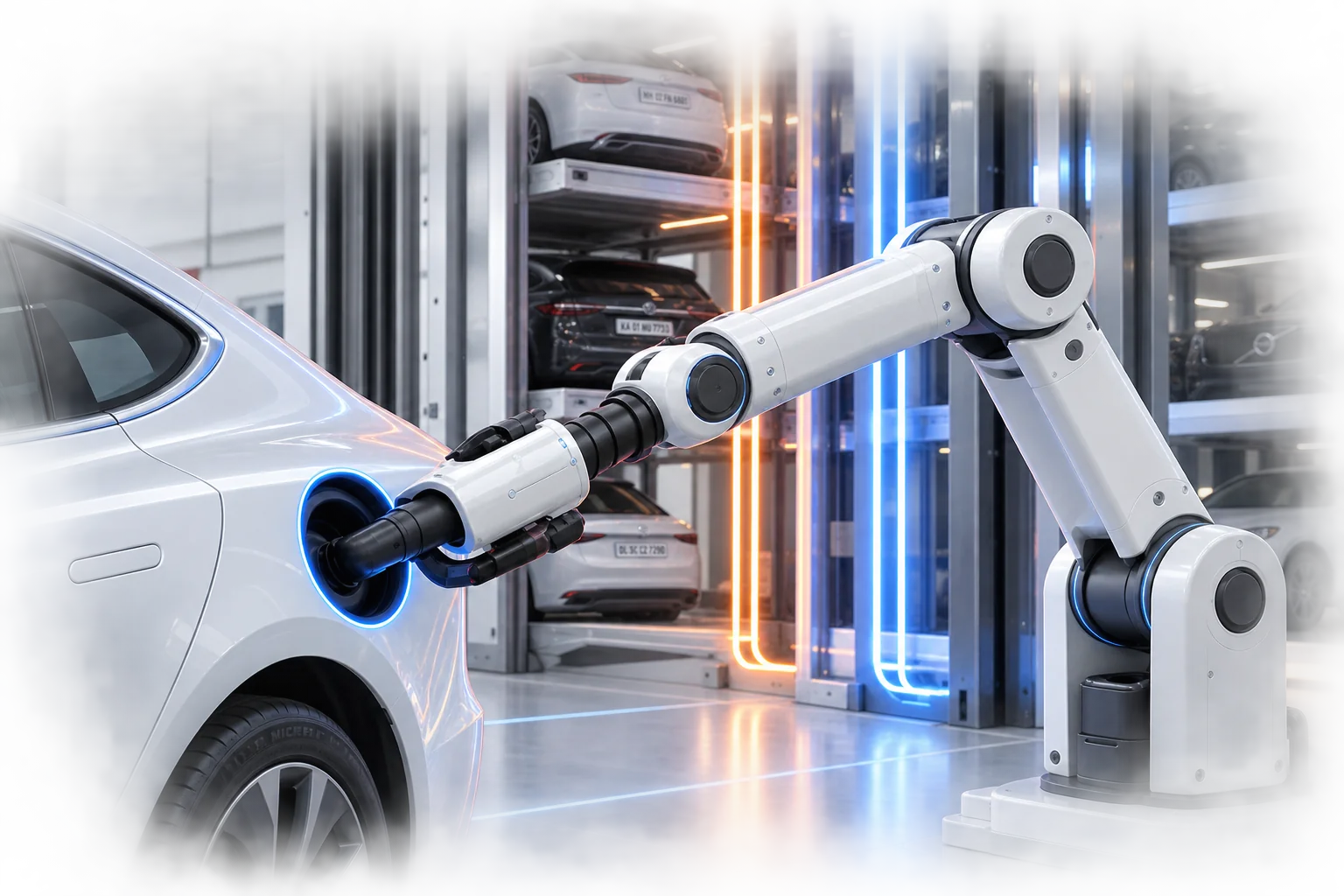
Operate, Optimize
and Scale with AI
Robotic arm plug in automation, real time fleet orchestration and predictive maintenance keep your system running at peak performance reducing downtime, saving time and easily scaling to meet growing fleet demand.
Agents
Sense, record, reason, decide, act.
Then read the result and do it again. The loop runs per bay, per site, and across every site at once.
Parking Agent
Assigns and sequences bays so the next car in is the next car out.
Charging Agent
Shapes draw across bays against solar yield, tariff and departure time.
Fleet Agent
Routes vehicles to the tower that will have a free, charged bay on arrival.
Infrastructure Agent
Watches structural and electrical state, and calls a fault before it lands.
Depot Agent
Runs an unattended site end to end: receive, charge, stage, dispatch.
Use cases
One layer, pointed at different ground.
The tower changes size. The stack running it does not.
Urban charging hubs
High-turnover sites on congested corridors, where ground is the constraint and dwell time is short.
Commercial and residential
Offices, malls and apartment blocks that cannot run a socket to every slot but can host one structure.
Fleet depots
Ride-hail, delivery and logistics fleets that charge on a schedule and need vehicles staged for the morning.
Autonomous depots
Robotaxi and shuttle operations where no driver is present to park, plug in, or move the vehicle on.
Horizon
Charging towers now.
Autonomous depots next, then the infrastructure a robotaxi fleet cannot run without.
The same structure, data and models carry forward. What changes is how much of the work happens with nobody in the car, and eventually nobody at the site.
Contact
Build the future of mobility with us.
Land, fleets, capital, or a tower of your own.