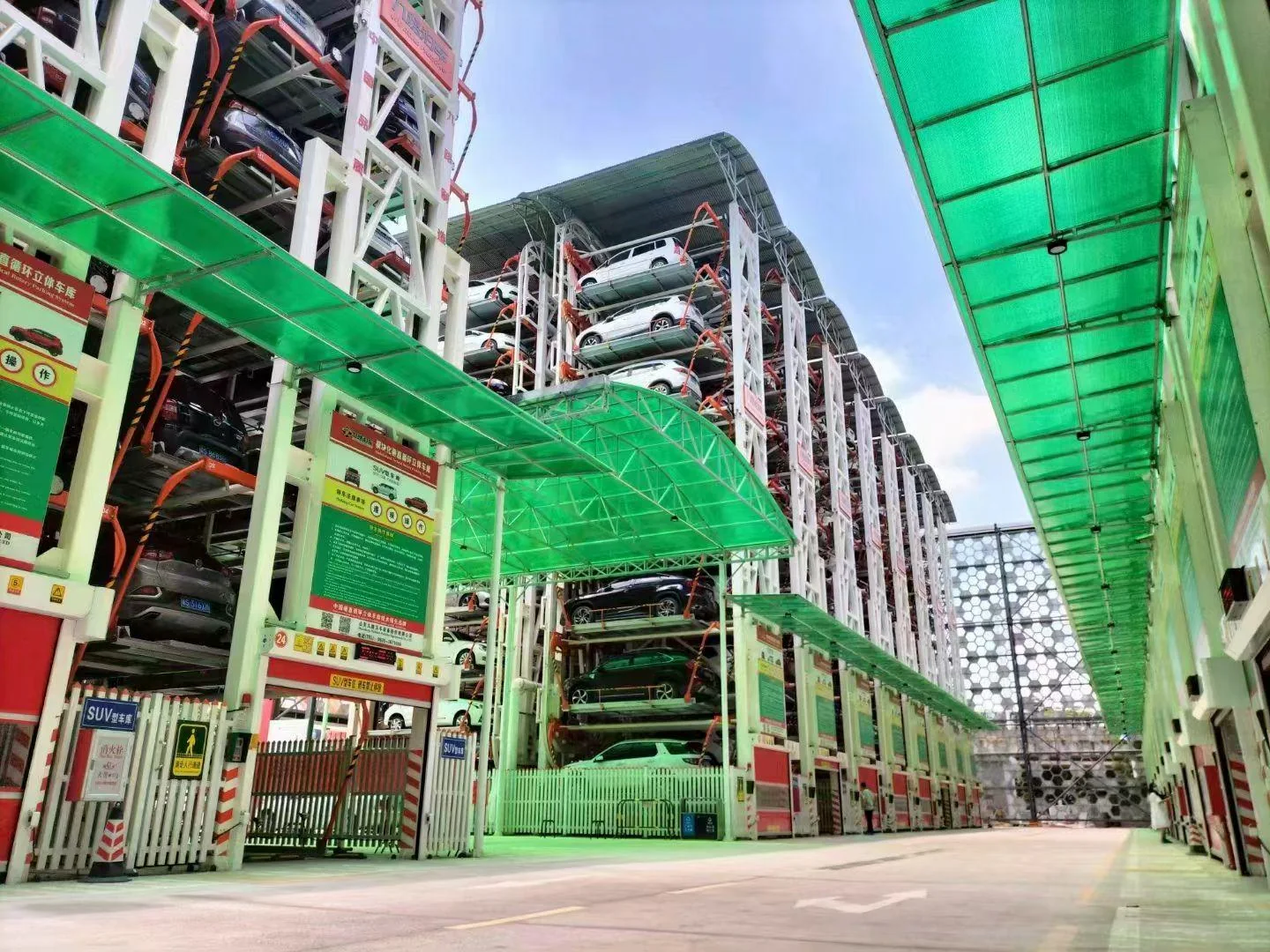
The short answer
Automated parking in India costs about ₹1.2 lakh to ₹15 lakh per car for the equipment. Stackers and puzzle systems sit at the bottom of that range, rotary towers at about ₹3–6 lakh, and robotic car parks at the top. Civil work, power, fire safety, GST and maintenance come on top of that.
I run a company that sells rotary towers, so take my view of this with that in mind. Still, I think price per car is the wrong number to start with. It leaves out the land under the car, which in an Indian city is usually the most expensive part of a parking space. It also hides what the supplier hasn’t quoted for. Most of this article is about those two gaps.
We don’t publish a price list, and every rupee figure below comes from a public source that’s linked, so you can check it.
Price per car, by system
Equipment prices per parking space, from Indian sources. The Indian Roads Congress (IRC) figures are planning numbers from 2015, so today’s prices will be higher. The rest are vendor guides and listings from 2025 and 2026.
| System | Per car | What it is | Source |
|---|---|---|---|
| Stacker (2–3 levels) | ₹1.5 lakh | A lift that puts a second car over the first | IRC SP 12, 2015 |
| Puzzle (lift-and-slide) | ₹1.2–2.5 lakh | A grid of pallets that slide and lift | City Park, 2025 |
| Rotary (vertical carousel) | ₹3–5 lakh | Pallets on a vertical loop, on the footprint of about two cars | City Park, 2025 |
| Rotary, 2,000 kg platform | ₹4–6 lakh | One Pune manufacturer’s listed price | IndiaMART listing |
| Robotic or shuttle | ₹6–15 lakh | Robots or shuttles carry the car to a rack | City Park, 2025 |
| Ramped concrete (RCC) car park | ₹4–6 lakh | Concrete decks you drive up, land excluded | IRC SP 12, 2015 |
The rotary figure of ₹3–6 lakh spans both rotary rows: the Mumbai guide’s ₹3–5 lakh and the Pune listing’s ₹4–6 lakh. IRC put fully automated systems at ₹8–10 lakh in 2015, inside today’s ₹6–15 lakh range for robotic and shuttle systems.
Marketplace listings mix “per set”, “per piece” and “per car”. A rotary unit at ₹1.6 lakh a set is not ₹1.6 lakh a car, and many listings don’t say how many cars a set holds, what the platform can lift or whether installation is included. Ask for a price per car at a stated payload, and nothing else is comparable.
For how the systems work and which plots they suit, see rotary vs puzzle vs stacker parking.
What changes the price on an Indian site
The same machine can cost very different amounts to own in different places. On Indian sites, five things move the number most.
Payload and the SUV mix
Many commercial platforms are rated at 2,000 to 2,500 kg. Indian buyers increasingly drive large SUVs and EVs. Toyota India lists the Fortuner’s gross vehicle weight at 2,610 to 2,735 kg, which is more than a 2,500 kg platform is rated for. A cheaper system that turns away a society’s heaviest cars hasn’t saved anyone money. Ask for the payload per platform in writing and check it against the heaviest vehicle you expect.
Monsoon and coastal air
Steel that stands outside through a Mumbai or Chennai monsoon, or near the sea anywhere on the coast, needs hot-dip galvanising or a proper powder-coat system, not just paint. Cheaper quotes often save money here, and you pay it back in repainting and rust repair.
Power cuts and backup
Where the grid drops out, a system that can’t release cars without power needs a generator big enough to run it, and that generator needs space, fuel and maintenance. Ask how cars come out during an outage, and how long it takes per car.
Connected load
In India, you pay for your sanctioned load every month whether you use it or not, so the system’s motor count matters. In one Indian supplier’s site study on a 9,188 sq ft plot, the puzzle layout needed 153 motors and 257 kW of connected load for 93 cars. The rotary layout needed 9 motors and 135 kW for 126 cars. The full comparison is in our earlier article. Fewer motors also means fewer parts to service each year.
Approvals
Height limits come from your city’s development control rules, and the fire NOC comes from the local fire authority. Both can add cost: a height cap can push you to a wider, lower system, and the fire authority may ask for detection or suppression the quote didn’t include. Check both before you compare prices.
What a quote leaves out
Check which of these each supplier has priced in:
- Foundations and civil work: a reinforced base for a tower, or a pit for a puzzle grid.
- Power: a new connection, a transformer upgrade or a generator.
- Cladding, if planning wants the system behind a facade.
- Fire detection and suppression.
- Installation, testing and handover.
- GST: parking equipment is commonly invoiced at 18%. In a 2024 advance ruling, input credit on an installed rotary system was refused because the authority treated it as part of the building, so check with your tax adviser.
- Maintenance: about ₹2,000 to ₹5,000 per space per year, according to the Mumbai guide.
The same guide breaks down a 100-car puzzle system in a mid-rise residential building:
- ₹1.5–2 crore for machinery
- ₹25–60 lakh for civil work
- ₹10–25 lakh for electrical
- ₹15–30 lakh for installation and testing
Those lines add up to ₹2–3.15 crore, or about ₹2–3.2 lakh a car. (The guide itself gives a total of ₹2.5–3.2 crore.) Machinery is 63 to 75% of the bill, so a quote for the machine alone can be a quarter to a third short of what you’ll actually spend.
Adding the land
To see what land does to the cost per car, here’s an illustrative example. The assumptions are mine, so swap in your own:
- Land at ₹1 lakh per m², about ₹9,300 per sq ft. Central land in a large metro often costs several times that.
- A surface space takes about 25 m² including its share of the aisle.
- A ramped car park uses 32 m² of floor per car (the IRC figure), over 5 floors.
- A 12-level rotary tower holds 22 cars on about two surface spaces, which I’ve counted as 50 m² including the approach.
| Surface lot | Ramped RCC car park | Rotary tower | |
|---|---|---|---|
| Land per car | 25 m² | 32 m² ÷ 5 floors = 6.4 m² | 50 m² ÷ 22 cars ≈ 2.3 m² |
| Land cost per car | ₹25 lakh | ₹6.4 lakh | ₹2.3 lakh |
| Build or equipment per car | Paving only | ₹4–6 lakh | ₹3–6 lakh |
| Total per car | ≈ ₹25 lakh | ≈ ₹10–12 lakh | ≈ ₹5–8 lakh |
The ramped car park’s build cost is a 2015 figure and the rotary range is from 2025 to 2026. If anything, this example flatters the ramped car park. The surface lot comes out most expensive, because ₹25 lakh of land per car could have held a building.
What India’s public car parks cost
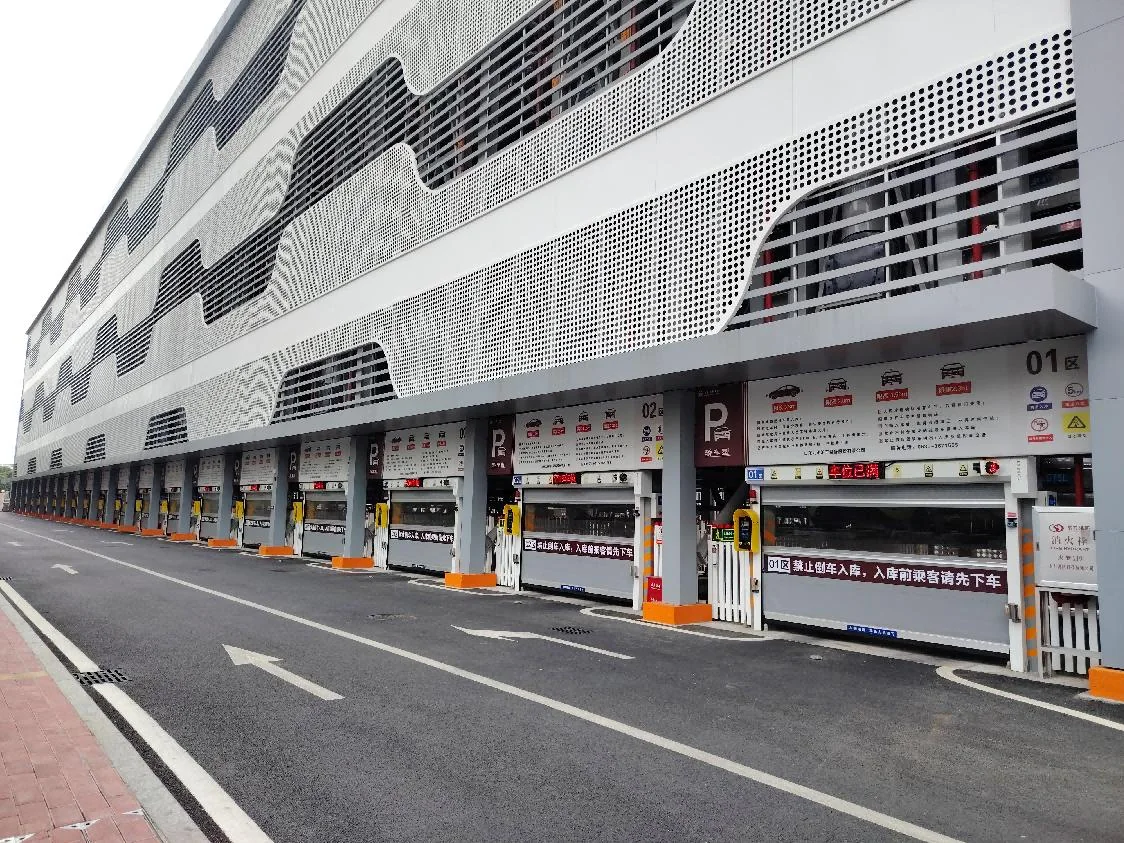
Cities across India have been building multilevel car parks. In 2025, Nagrika collected the reported costs and capacities of several, from news coverage. Divided out, they come to:
| City | Reported cost | Cars | Per car (our division) |
|---|---|---|---|
| Trichy | ₹20 crore | 650 | ₹3.1 lakh |
| Guwahati (Panbazar) | ₹11 crore | Not reported | ₹4.4 lakh, as reported |
| Thiruvananthapuram | ₹16.58 crore | 202 | ₹8.2 lakh |
| Thiruvananthapuram | ₹19 crore | 210 | ₹9.0 lakh |
| Itanagar | ₹14.71 crore | 143 | ₹10.3 lakh |
| Coimbatore | ₹41.67 crore | 380 | ₹11.0 lakh |
| Itanagar | ₹18.09 crore | 108 | ₹16.8 lakh |
| Patna (two hydraulic car parks) | ₹28.86 crore | 156 | ₹18.5 lakh |
That is ₹3.1 lakh to ₹18.5 lakh a car, usually on public land that isn’t in the price. Some budgets include two-wheeler bays or shops, so treat the figures as rough. Patna’s pair is worth noticing: two hydraulic, automated car parks came to about ₹18.5 lakh a car, the highest on the list. An automated system bought through a public tender isn’t automatically cheap.
Occupancy matters as much as cost. Nagrika found Chandigarh’s Sector 17 car park using about 22% of its 900 spaces, and Bhopal’s MP Nagar and New Market car parks using 300 of 1,800 car spaces, about 17%. Drivers chose the street over a ramp, a walk and a dark stairwell. A space that stands empty five days in six costs roughly six times as much per car actually parked.
Karol Bagh: a car park the land paid for
The best-documented Indian example of the economics working is at Ajmal Khan Park in Karol Bagh, Delhi. The government’s PPP case study describes how the Municipal Corporation of Delhi converted about an acre of its land to freehold and auctioned it to a developer. The developer could build a mall, but in return had to build an automated puzzle car park and hand 360 public parking spaces to MCD free of charge. A further 120 public spaces sit inside the mall.
- Project cost: ₹27.18 crore. Across the 360 spaces handed over, that is about ₹7.6 lakh a car. Across all 480 public spaces it is about ₹5.7 lakh. The case study doesn’t say exactly what the figure covers.
- Land auction: ₹182 crore, one-time.
- Recurring income for MCD: ₹8–10 crore a year, from the mall’s property tax and from leasing the public parking to the developer, on top of parking fees.
- Build time: 18 months.
The land raised more than six times what the car park cost. In a dense market, the question isn’t whether automated parking is affordable. It’s how much land it frees up, and what that land is worth. The case study also says roadside parking in the market fell considerably. That matters in a city it says had 13.4 million registered vehicles in January 2022 and public parking for only 50,000 cars.
The car parks that fill up are close to where people are going, quick to use, and feel safe. Studio Matrx’s guide to multi-level car park design covers how ramped, split-level and automated layouts handle those things.
The cost of adding EV charging
- Chargers: a 2026 Indian price guide puts commercial AC chargers of 7.4 to 22 kW at about ₹35,000 to ₹1.2 lakh each. Most EVs sold in India charge at 7.2 to 11 kW on AC, which fills a car parked for a few hours. DC fast charging costs far more and only pays off where cars turn over quickly.
- Power: 22 kW AC needs a three-phase supply, and ten such chargers can draw 220 kW together. Load management shares a smaller connection between them in software, which keeps the sanctioned load, and the monthly bill, down.
- Moving platforms: in most mechanical systems the car moves, so a charger fixed to the wall can’t follow it. Ask whether cars keep charging while the system runs.
Wiring for chargers while the system goes in costs far less than adding it afterwards.
How to get quotes you can compare
Send every supplier the same brief and ask for the same answers back:
- Plot dimensions, the height your city allows, and how many cars you need.
- The heaviest vehicle you expect, so every quote is for the same payload.
- A price per car and a project price, with civil, power, installation, GST and the first year’s maintenance listed separately.
- Connected load in kW, and how cars come out during a power cut.
- Steel grade and corrosion treatment.
- Retrieval time to the furthest position when the system is full.
- Installation time, warranty terms, and maintenance cost per space after year one.
- Charger power per bay, and whether charging continues while the system moves.
Common questions
How much does an automated car parking system cost in India?
About ₹1.2 lakh to ₹15 lakh per car for the equipment: stackers and puzzle systems ₹1.2–2.5 lakh, rotary towers about ₹3–6 lakh, and robotic or shuttle systems ₹6–15 lakh. Civil work, power, installation, GST and maintenance are extra, and add roughly a third to a half again on a typical project.
What is the price of a rotary car parking system in India?
Indian guides and listings put rotary systems at about ₹3–6 lakh per car. Levels, platform payload, built-in EV charging and what the quote includes all move the price.
Is automated parking cheaper than a multilevel concrete car park?
On build cost alone they overlap: ₹4–6 lakh per car for ramped concrete (IRC, 2015) and ₹3–6 lakh for a rotary tower (2025–26). Automated systems need a fraction of the land, so on any plot where land is expensive they usually work out cheaper. The land example above shows the sum.
How much does maintenance cost?
About ₹2,000 to ₹5,000 per space per year on a maintenance contract, according to one Mumbai guide. Systems with fewer motors cost less to keep running.
Where AutoDock fits
We bring rotary towers to India that are built around the problems above. Every platform is rated to 3,500 kg. Every bay has a 21 kW AC charger that keeps charging while the tower turns. Cars can be retrieved by hand in a power cut. Each unit is factory-built in modules and installs in 3 to 5 days. We don’t quote off a price list. If you send us your plot size, the height allowed and the number of cars you need, we’ll tell you what a tower would hold and what the project would involve. The systems page and FAQ have the specifications.