How we train Laan AI in physical AI.
Every tower is run by learned models: one that sees and plugs in the car, one that runs the tower, and one that decides where each car in a fleet should go. They are trained the way autonomy companies train their robots: in a digital twin of a real city first, then fine-tuned on data from real towers.
Digital twin
We train in a copy of a real city.
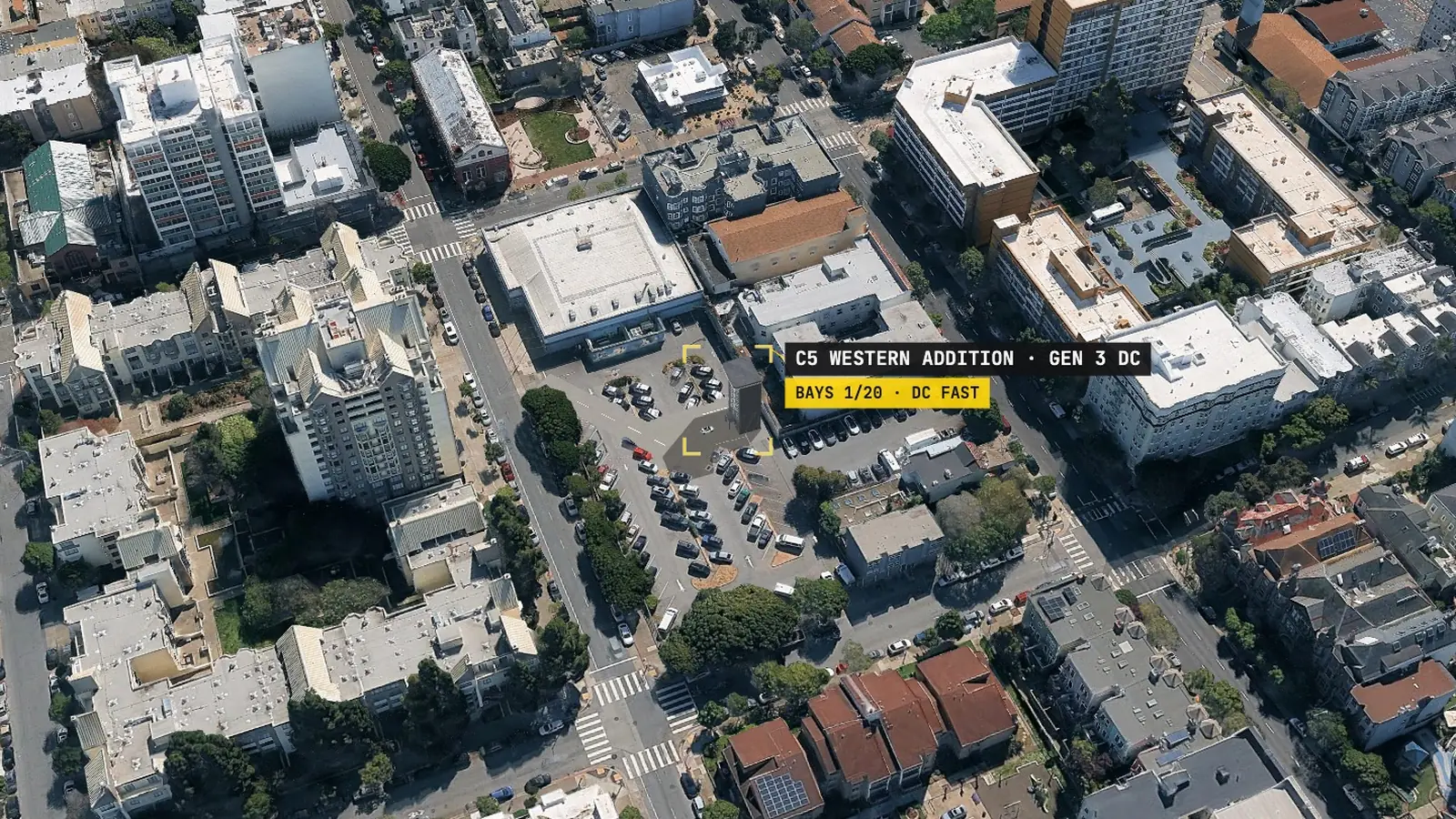
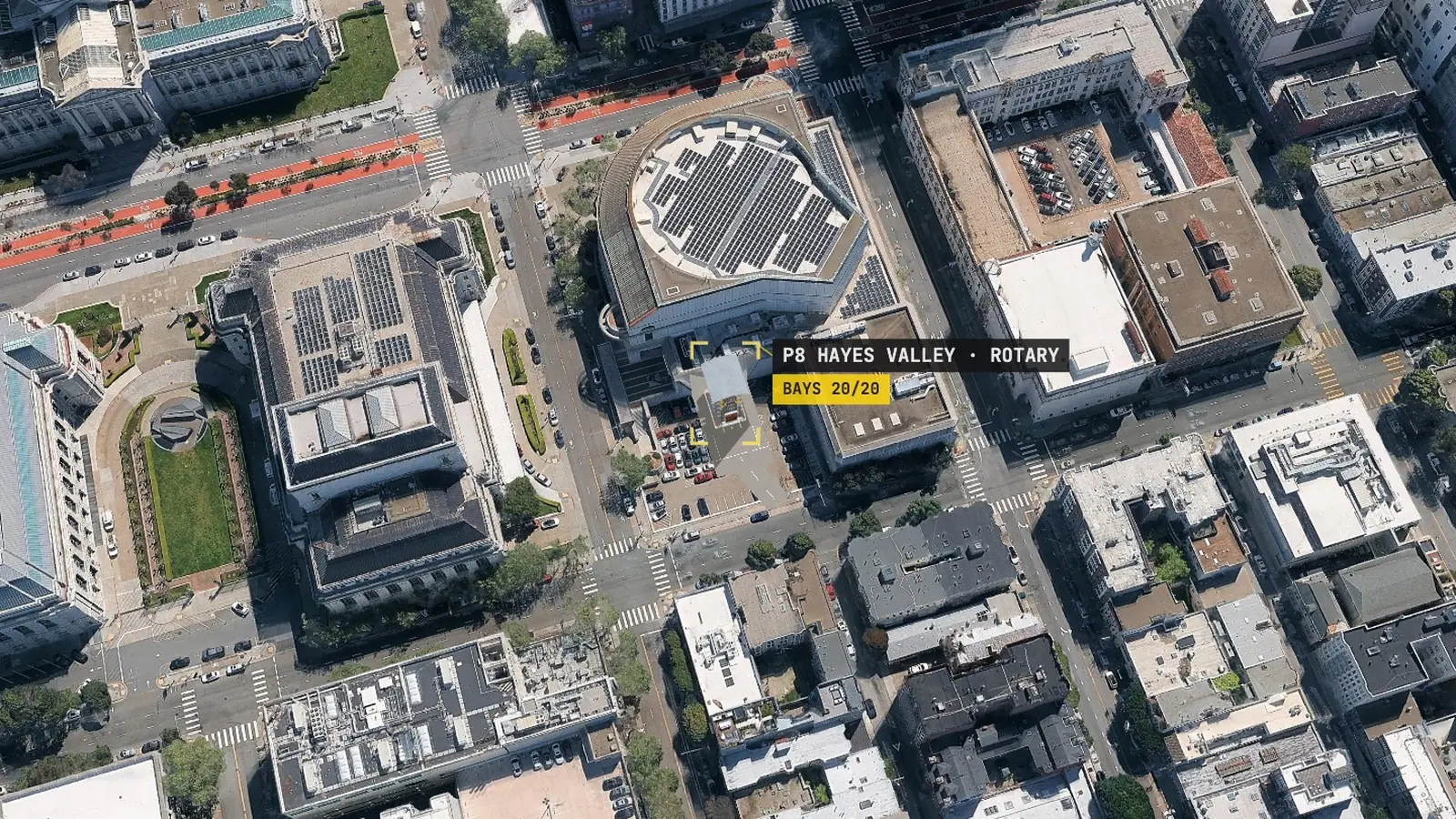
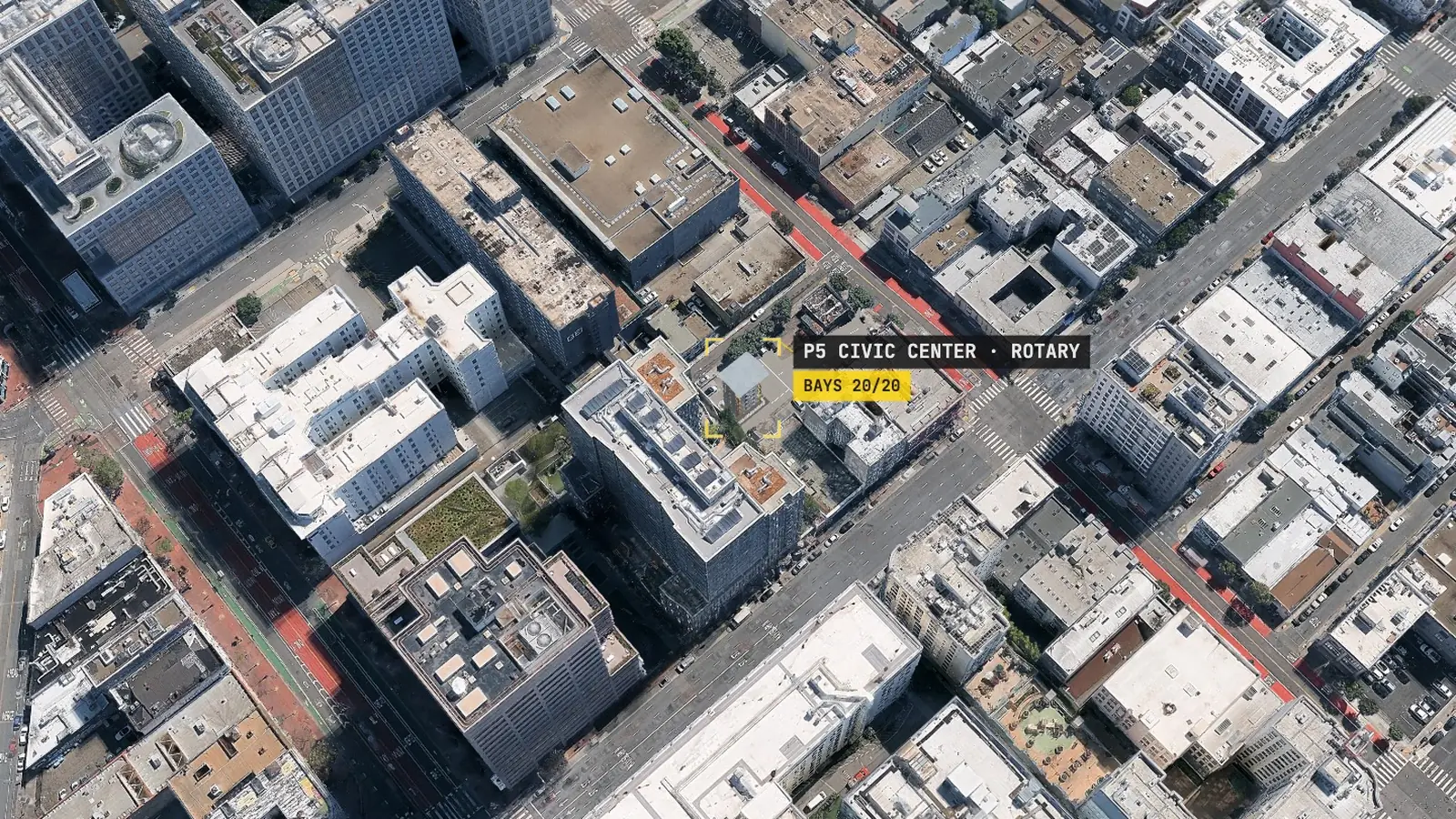
Photoreal 3D of San Francisco, with every tower placed on its own plot.
Before a model touches a real car, it is trained and tested here: the streets, the buildings and the thirteen sites in this slideshow, with a simulated fleet driving between them at any hour and in any demand we can script.
Models
Three models, one tower.
Each learns a different job, from a different kind of data.
Vision · robotic plug-in
Finds the charge cap, opens it and seats the plug on any car model. Trained on real camera frames from the towers and on rendered cars at every angle, colour and light the cameras will meet.
Tower operations
Runs the gate, the pallets and the bays. Learns from the towers’ own logs: every parking run, every retrieval, every load and every fault, so timing and wear are predicted rather than guessed.
Laan AI · fleet dispatch
Decides whether an idle car should charge, park, move or hold, and where. Trained on simulated fleet days in the digital twin, then fine-tuned on real demand and real tower capacity.
Data engine
Every version goes round the same loop.
Collect, label, train, simulate, shadow, release, and back to collect.
The towers in service are where the next model’s training data comes from. The more towers run, the more hard cases the loop sees, and the better each release gets at them.
Collect
Cameras, sensors and controllers on each tower record what happened, and the moments that matter most are flagged: a missed port, a slow retrieval, a decision that cost time.
Label
Flagged moments are labelled: where the port was, what the pallet should have done, which choice was cheapest in hindsight. Hard cases are kept and weighted, not averaged away.
Train
Models are pre-trained on simulated and rendered data at scale, then fine-tuned on the labelled real-world set, so they learn the general skill first and the real conditions second.
Simulate
Every new version is replayed in the digital twin against the same city, the same sites and the same scripted days as the version it replaces, including the rare cases a real tower may see once a year.
Shadow
Next it runs alongside the live model on real towers. It sees everything and decides everything, but nothing it decides is acted on; its choices are logged and compared.
Release
Only a version that beats the live one in simulation and in shadow is released, and its results feed straight back into the first step.
Fine-tuning
Simulation first. The real world decides.
General skill from the twin, real conditions from the towers, local detail from each site.
Pre-trained in simulation
In the twin a fleet runs faster than real time, demand can spike on cue, and a robot arm can meet every car model we can render before it meets a real one. That is where the general skill comes from.
Fine-tuned on real towers
Simulation is never exactly the world. Real camera frames, real pallet timings and real demand close the gap, so the model that ships has learned from the conditions it will work in.
Adapted to each site
Every tower has its own light, camera angles, entry and street. Each site’s data tunes the models for that site, while what is learned at one tower improves the rest.
Safety
The model proposes. The hardware has the last word.
Learning makes the towers faster and smarter. It is never what keeps people and cars safe.
Hardware interlocks first
Instant braking, anti-pinch, weight limiting, anti-overrun and anti-door opening are built into the tower and act on their own. A model can ask for a move; it cannot override them.
Gated releases
No version reaches a tower without passing the simulation replay and the shadow run. If it is not better than the live model, it does not ship.
People can always step in
Every tower keeps manual access. An operator can stop, take over or hand a car back by hand at any time, and those moments become training data too.
Contact
Build the future of mobility with us.
Land, fleets, capital, or a tower of your own.